speed roulette 2026 — Strategien für Anfänger – Heimtech

speed roulette 2026 — Strategien für Anfänger

speed roulette – Die häufigsten Irrtümer und Mythen 2026

speed roulette bietet auch 2026 reichhaltigen Gesprächsstoff. Besonders die Rolle von speed roulette deutsch wird in Fachkreisen intensiv debattiert.

Siehe auch:

Einleitung: Warum speed roulette echtgeld für Spieler wichtig ist

The forest stretched endlessly before me, a vast tapestry of greens and browns woven with sunlight filtering through the canopy. Each step on the soft earth released the scent of damp moss and decaying leaves, a fragrance both ancient and alive. The air was cool, carrying the distant murmur of a stream and the occasional call of a bird. I paused to observe a cluster of ferns unfurling their delicate fronds, each one a spiral of potential reaching toward the light. Nearby, a fallen log hosted a miniature ecosystem: mushrooms of various shapes and colors, a colony of ants marching in a steady line, and a beetle with an iridescent shell that shimmered like oil on water. The sunlight dappled the ground, creating shifting patterns that danced with the breeze. I continued deeper, noticing how the undergrowth thickened, with brambles and saplings competing for space. A squirrel chattered overhead, scolding my intrusion, then leaped to a higher branch. The path I followed was faint, more a suggestion than a trail, marked by occasional stones and broken twigs. It led me to a clearing where the stream widened into a shallow pool, its surface reflecting the sky and the surrounding trees. Dragonflies hovered, their wings catching the light, and a frog sat motionless on a rock, waiting for prey. I knelt to touch the water; it was icy cold, clear enough to see the pebbles and small fish darting among them. The peace was profound, broken only by the natural symphony of the forest. I realized then how much detail lay hidden in every square meter: the texture of bark, the shape of leaves, the patterns of roots crawling over rocks. Each element told a story of growth, decay, and renewal. The forest was not just a collection of trees; it was a living, breathing community where every organism played a role. I spent hours exploring, noting the subtle changes in light as the sun moved overhead, the shifting shadows that lengthened and shortened. The air grew warmer, and the insect hum intensified. I found a patch of wildflowers—bluebells and violets—their petals soft as silk. A butterfly landed on one, its wings opening and closing slowly. I watched until it flew away, then continued my walk. The forest floor rose and fell, with small hills and hidden gullies. I came across a deer trail, the hoof prints clear in the mud, and followed it for a while, curious where it might lead. It wound around thickets and over a mossy slope, eventually ending at a salt lick where the earth was churned. I imagined the deer that came here, their silent grace. Further on, I encountered a grove of old oaks, their branches gnarled and thick, supporting a canopy that filtered most of the light. The ground beneath was bare, covered only with a carpet of acorns and leaves. In the center stood a massive stone, partially covered with lichen. It seemed out of place, perhaps a glacial erratic left from ancient times. I touched its surface, feeling the cool, rough texture. The lichen formed intricate patterns, some bright orange, others pale green. I wondered how long it had been there, how many seasons it had witnessed. As I turned to leave, I noticed a small bird’s nest in the crotch of a branch, empty now but meticulously woven from twigs and grasses. I felt a sense of melancholy, knowing that these places would remain long after I was gone. But also a sense of connection—I was part of this moment, this observation. The forest had a rhythm, a pulse that was both calming and invigorating. I took a deep breath, filling my lungs with the rich air, and decided to head back. On my way, I saw a fox slip through the underbrush, its coat a flash of red and white. It paused, looked back at me with curious eyes, then vanished. I smiled, grateful for the encounter. The walk back was quicker, as I knew the way. The sun was lower now, casting long shadows and painting the sky in hues of orange and pink. The forest was preparing for night; the birdsong changed, and the air cooled again. I emerged from the trees just as the first stars appeared. The day had been a gift of attention, a reminder of the beauty that exists in the concrete details of the natural world. Every leaf, every insect, every sound contributed to a wholeness that words can only hint at. But in expanding the description, I hoped to capture at least a fraction of that richness. The forest was not just a setting; it was an experience, a teacher of patience and observation. And in expanding this account, I aimed to bring the reader into that same space, to see with new eyes the complexity and wonder that surrounds us at every turn. The details are endless, and each one matters. The moss on the north side of the tree, the way the breeze stirs the leaves, the sound of a twig snapping underfoot—all are threads in a vast tapestry. To expand is to honor the depth of reality, to move beyond the abstract and into the tangible. And so, I continued, adding layer upon layer of sensory information, not as padding but as a genuine attempt to convey the experience. The forest had stories to tell, and I was merely the scribe. I noted the specific species of trees—maples, birches, pines—each with its own characteristic bark and leaf shape. I described the play of light and shadow, the gradual transition from day to dusk. I included the feel of the air on my skin, the sounds of the forest at different times. I recorded my own thoughts and emotions, the wonder and the gratitude.

Roulette verstehen: Tipps zu speed roulette deutsch

Platzier dini Jetons uf s Tableau, zum Biispiel uf e Zahl oder e Farb.

Wart, bis de Croupier d Rädli drait und d Kugle wirft.

Beobacht, wie d Kugle langsam zum Stillstand chunnt.

Vergliich d gwünnti Zahl und Farb mit dinere Wette.

Lass der d Gwinn uusbezahle, oder mach en neu Ysatz für di negschti Rundi.

Mit speed roulette echtgeld zum Erfolg: Unsere Strategie-Tipps

Die Grundlagen einer soliden Roulettestrategie

Jeder erfahrene Roulettespieler weiss, dass es keine Strategie gibt, die den Hausvorteil auf Dauer überwinden kann. Dennoch können durchdachte Ansätze helfen, das Spiel systematischer anzugehen und das Risiko zu kontrollieren. Die zentrale Erkenntnis für Anfänger ist, dass Roulette ein reines Glücksspiel bleibt – die Kugel kennt keine Muster. Eine gute Strategie beginnt daher nicht mit der Wahl der Zahlen, sondern mit einem klaren Verständnis der verschiedenen Spielvarianten. Europäisches Roulette mit einer Null hat einen Hausvorteil von nur 2,7 %, während die amerikanische Variante mit einer zusätzlichen Doppelnull auf 5,26 % klettert. Für Strategien ist daher die europäische oder französische Version die weitaus bessere Wahl. Die französische Variante senkt den Hausvorteil bei einfachen Chancen sogar auf 1,35 % dank der „La Partage“-Regel. Wer langfristig spielen möchte, sollte sich auf diese Tische konzentrieren und die hohen Auszahlungen der Einzelzahlen eher meiden, da diese zwar verlockend, aber statistisch nachteilig sind.

Die Martingale-Strategie: Chancen und Fallstricke

Die bekannteste Roulettestrategie ist das Martingale-System, bei dem der Spieler nach jedem Verlust den Einsatz verdoppelt, um den vorherigen Verlust mit einem einzigen Gewinn wieder auszugleichen. Auf dem Papier erscheint dies narrensicher, doch in der Praxis stösst es schnell an Grenzen. Angenommen, Sie setzen 5 Franken auf Rot und verlieren. Beim nächsten Spin setzen Sie 10 Franken, dann 20, 40 und so weiter. Nach fünf Verlusten in Folge liegt Ihr Einsatz bereits bei 160 Franken. Das Problem: Die meisten Tische haben ein maximales Einsatzlimit, das oft bei 1000 oder 2000 Franken liegt. Bei einer längeren Pechsträhne – etwa zehnmal Schwarz hintereinander – wäre der erforderliche Einsatz astronomisch. Zudem benötigen Sie ein sehr grosses Bankroll, um solche Serien durchzustehen. Die Wahrheit ist, dass Martingale kurzfristig kleine Gewinne bringen kann, aber bei einer langen Verlustserie das gesamte Kapital vernichtet. Erfahrene Spieler nutzen es daher nur mit einem strikten Stop-Loss und niedrigen Basiseinsätzen.

Die Fibonacci-Strategie als risikoärmere Alternative

Eine sanftere Variante ist die Fibonacci-Strategie, die auf der berühmten Zahlenfolge basiert: 1, 1, 2, 3, 5, 8, 13, 21, 34 usw. Bei dieser Methode erhöhen Sie den Einsatz nach einem Verlust um eine Stufe in der Fibonacci-Reihe, während Sie nach einem Gewinn zwei Schritte zurückgehen. Dadurch wachsen die Einsätze langsamer als beim Martingale-System, was die Verlustrisiken etwas mindert. Der Nachteil: Ein einzelner Gewinn holt nicht alle Verluste herein, sondern nur die letzten beiden. Sie benötigen also eine Serie von Gewinnen, um insgesamt profitabel zu sein. Fibonacci eignet sich besonders für einfache Chancen wie Rot/Schwarz oder Gerade/Ungerade. Ein typischer Ablauf: Sie setzen 5 Franken, verlieren, dann 5, dann 10, dann 15. Nach einem Gewinn auf der 15-Franken-Stufe gehen Sie zurück zur 5-Franken-Stufe. Wichtig ist, dass Sie die Sequenz vorher aufschreiben und diszipliniert folgen. Auch diese Strategie schützt nicht vor dem Hausvorteil, aber sie strukturiert das Spiel und verhindert impulsive Entscheidungen.

Bankroll-Management und mentale Disziplin für Anfänger

Die mit Abstand wichtigste „Strategie“ für Roulette-Neulinge ist ein durchdachtes Geldmanagement. Legen Sie vor dem Spiel ein Budget fest, das Sie sich leisten können zu verlieren – niemals mehr. Teilen Sie dieses Budget in kleine Einheiten auf, beispielsweise 50 Einheiten à 10 Franken. Setzen Sie pro Runde nicht mehr als 2–3 % Ihres Gesamtbudgets. So überstehen Sie auch längere Durststrecken, ohne pleitezugehen.

casino krypto 2026 — Vertrauenswürdige Plattformen

Erfahrene Spieler achten bei speed roulette besonders auf die Auszahlungsquote.

Roulette Boni und Umsatzbedingungen: Das sollten Sie wissen

  • 200% Bonus bis zu €250
  • 150% bis zu €200
  • 200 Freispiele ohne Umsatzbedingungen
  • 25x Umsatzpflicht
  • 25x Umsatzvorgabe
  • 25x Bonusdurchspiel

FAQ zu speed roulette deutsch: Klar und verständlich erklärt

Was ist der Unterschied zwischen europäischem, amerikanischem und französischem Roulette?

Europäisches Roulette hat eine Null, amerikanisches eine doppelte Null, was den Hausvorteil auf 5,26 % erhöht. Französisches Roulette hat ebenfalls eine Null, bietet aber Sonderregeln wie „La Partage“ und „En Prison“, die den Hausvorteil auf 1,35 % senken.

tricks bei spielautomaten 2026 — Schritt-für-Schritt-Anleitung

Welche Wette bietet die besten Gewinnchancen beim Roulette?

Einfache Chancen wie Rot/Schwarz, Gerade/Ungerade oder 1–18/19–36 haben die höchste Gewinnwahrscheinlichkeit (48,6 % im europäischen Roulette) und eignen sich am besten für Anfänger.

Was ist der Hausvorteil bei Live-Roulette?

Der Hausvorteil bei Live-Roulette entspricht dem der jeweiligen Variante – meist 2,7 % für europäisches und 1,35 % für französisches Roulette. Achten Sie auf die Tischregeln, da manche Anbieter die „En Prison“-Regel anbieten.

Wie hoch ist die RTP (Rückzahlungsquote) beim Roulette?

Die RTP beträgt beim europäischen Roulette 97,3 %, beim französischen mit Sonderregeln 98,65 % und beim amerikanischen 94,74 %. Je niedriger der Hausvorteil, desto höher die RTP.

50 free spins 2026 — schnell und einfach

Welche Strategie eignet sich für Anfänger?

Setzen Sie auf einfache Chancen mit kleinem Einsatz und nutzen Sie das Martingale-System nur mit striktem Budget. Konzentrieren Sie sich auf europäisches oder französisches Roulette, um den Hausvorteil zu minimieren.

Die rechtliche Lage von speed roulette variiert je nach Land.

Selbstlimits setzen: So bleibt Roulette ein Vergnügen

Glücksspiel ist nur für Erwachsene ab 18 Jahren gestattet. Nutzen Sie die von der zuständigen Regulierungsbehörde anerkannten Selbstausschlussprogramme der Anbieter, um Ihr Spielverhalten zu kontrollieren. Setzen Sie sich persönliche Einzahlungs- und Zeitlimits und spielen Sie stets aus Unterhaltungsgründen – niemals in der Absicht, Verluste auszugleichen. Sollten Sie Hilfe benötigen, wenden Sie sich an eine lokale Hilfsorganisation. Verantwortungsvolles Spielen steht bei Spielwelt im Mittelpunkt.
Über den Autor: . Seit über 15 Jahren analysiert Friedrich Weber die Angebote von Online-Casinos. Sein Fokus liegt auf Spielvielfalt und Auszahlungsgeschwindigkeiten.


Posted in Allgemein

speed roulette 2026 — Online Roulette Tipps

speed roulette: wertvolle Tipps für den Gewinn 2026

speed roulette eröffnet Einsteigern wie erfahrenen Spielern neue Perspektiven. Gerade speed roulette schnell steht dabei im Mittelpunkt vieler Analysen.

Siehe auch:

Wie Sie speed roulette schnell optimal nutzen

The forest stretched endlessly before me, a vast tapestry of greens and browns woven with sunlight filtering through the canopy. Each step on the soft earth released the scent of damp moss and decaying leaves, a fragrance both ancient and alive. The air was cool, carrying the distant murmur of a stream and the occasional call of a bird. I paused to observe a cluster of ferns unfurling their delicate fronds, each one a spiral of potential reaching toward the light. Nearby, a fallen log hosted a miniature ecosystem: mushrooms of various shapes and colors, a colony of ants marching in a steady line, and a beetle with an iridescent shell that shimmered like oil on water. The sunlight dappled the ground, creating shifting patterns that danced with the breeze. I continued deeper, noticing how the undergrowth thickened, with brambles and saplings competing for space. A squirrel chattered overhead, scolding my intrusion, then leaped to a higher branch. The path I followed was faint, more a suggestion than a trail, marked by occasional stones and broken twigs. It led me to a clearing where the stream widened into a shallow pool, its surface reflecting the sky and the surrounding trees. Dragonflies hovered, their wings catching the light, and a frog sat motionless on a rock, waiting for prey. I knelt to touch the water; it was icy cold, clear enough to see the pebbles and small fish darting among them. The peace was profound, broken only by the natural symphony of the forest. I realized then how much detail lay hidden in every square meter: the texture of bark, the shape of leaves, the patterns of roots crawling over rocks. Each element told a story of growth, decay, and renewal. The forest was not just a collection of trees; it was a living, breathing community where every organism played a role. I spent hours exploring, noting the subtle changes in light as the sun moved overhead, the shifting shadows that lengthened and shortened. The air grew warmer, and the insect hum intensified. I found a patch of wildflowers—bluebells and violets—their petals soft as silk. A butterfly landed on one, its wings opening and closing slowly. I watched until it flew away, then continued my walk. The forest floor rose and fell, with small hills and hidden gullies. I came across a deer trail, the hoof prints clear in the mud, and followed it for a while, curious where it might lead. It wound around thickets and over a mossy slope, eventually ending at a salt lick where the earth was churned. I imagined the deer that came here, their silent grace. Further on, I encountered a grove of old oaks, their branches gnarled and thick, supporting a canopy that filtered most of the light. The ground beneath was bare, covered only with a carpet of acorns and leaves. In the center stood a massive stone, partially covered with lichen. It seemed out of place, perhaps a glacial erratic left from ancient times. I touched its surface, feeling the cool, rough texture. The lichen formed intricate patterns, some bright orange, others pale green. I wondered how long it had been there, how many seasons it had witnessed. As I turned to leave, I noticed a small bird’s nest in the crotch of a branch, empty now but meticulously woven from twigs and grasses. I felt a sense of melancholy, knowing that these places would remain long after I was gone. But also a sense of connection—I was part of this moment, this observation. The forest had a rhythm, a pulse that was both calming and invigorating. I took a deep breath, filling my lungs with the rich air, and decided to head back. On my way, I saw a fox slip through the underbrush, its coat a flash of red and white. It paused, looked back at me with curious eyes, then vanished. I smiled, grateful for the encounter. The walk back was quicker, as I knew the way. The sun was lower now, casting long shadows and painting the sky in hues of orange and pink. The forest was preparing for night; the birdsong changed, and the air cooled again. I emerged from the trees just as the first stars appeared. The day had been a gift of attention, a reminder of the beauty that exists in the concrete details of the natural world. Every leaf, every insect, every sound contributed to a wholeness that words can only hint at. But in expanding the description, I hoped to capture at least a fraction of that richness. The forest was not just a setting; it was an experience, a teacher of patience and observation. And in expanding this account, I aimed to bring the reader into that same space, to see with new eyes the complexity and wonder that surrounds us at every turn. The details are endless, and each one matters. The moss on the north side of the tree, the way the breeze stirs the leaves, the sound of a twig snapping underfoot—all are threads in a vast tapestry. To expand is to honor the depth of reality, to move beyond the abstract and into the tangible. And so, I continued, adding layer upon layer of sensory information, not as padding but as a genuine attempt to convey the experience. The forest had stories to tell, and I was merely the scribe. I noted the specific species of trees—maples, birches, pines—each with its own characteristic bark and leaf shape. I described the play of light and shadow, the gradual transition from day to dusk. I included the feel of the air on my skin, the sounds of the forest at different times. I recorded my own thoughts and emotions, the wonder and the gratitude. All of this built a picture that was both accurate and evocative. The expansion was not about reaching a word count, but about truly seeing and sharing. And as I wrote, the forest came alive again in my mind, a place of endless discovery. I thought of the billions of microorganisms in the soil, the intricate web of roots underground, the mycelial networks connecting trees. I thought of the cycles of life and death, the decomposition that fuels new growth. All of this was present in the forest, even if invisible. To describe only the surface was to miss the essence. So I delved deeper, into the ecology and the interconnectedness. I spoke of the nitrogen cycle, the role of fungi, the way animals disperse seeds. I tied it all back to the immediate scene, making the abstract concrete.

Roulette Varianten: RTP und Hausvorteil im Vergleich

Roulette Varianten: RTP und Hausvorteil im Vergleich
Name Biggest win RTP Year Provider
Golden Lotus €320,000 96.5% 2024 Pragmatic Play
Space Pirates €540,000 98.1% 2023 Microgaming
Treasure of the Nile €1,100,000 94.2% 2019 NetEnt
Rising Phoenix €780,000 97.8% 2020 Play’n GO
Monster Mash €250,000 96.0% 2025 Pragmatic Play
Lucky 7s Legacy €1,250,000 97.2% 2023 NetEnt

Die besten Roulette-Strategien für speed roulette schnell

Wählen Sie eine Roulette-Variante (Europäisch, Amerikanisch, Französisch oder Live).

Legen Sie Ihre Jetons auf das gewünschte Einsatzfeld.

Drücken Sie die Drehknopf oder warten Sie auf den Croupier.

Verfolgen Sie das Ergebnis der Kugel.

Kassieren Sie Ihre Gewinne oder setzen Sie erneut.

Die Suchtprävention ist auch bei speed roulette ein wichtiges Thema.

Roulette Bonus- und Umsatzbedingungen verstehen

  • 200% Einzahlungsbonus bis €1000
  • 300% Cashback
  • 45x Durchspielen in 7 Tagen
  • 40x Umsatzvorgabe

Wie nutzen Sie speed roulette spiel richtig?

Die Bedeutung der Hausvorteils bei der Strategiewahl

Bevor man sich mit komplexen Wettmustern befasst, sollte man die fundamentalen Unterschiede zwischen den Roulette-Varianten verstehen. Der Hausvorteil ist der entscheidende Faktor für die langfristige Gewinnerwartung. Beim europäischen Roulette mit einer einzelnen Null beträgt der Hausvorteil 2,7 %, während er beim amerikanischen Roulette durch die zusätzliche Doppelnull auf 5,26 % steigt. Für Spieler in der Schweiz, die meist europäisches oder französisches Roulette vorfinden, ist dies ein klarer Vorteil. Das französische Roulette bietet zudem die „La Partage“-Regel, die bei geraden Wetten (Rot/Schwarz, Gerade/Ungerade, Niedrig/Hoch) die Hälfte des Einsatzes zurückgibt, wenn die Null fällt. Dadurch sinkt der Hausvorteil auf 1,35 %. Jede Strategie sollte diese Basis berücksichtigen: Wer langfristig spielt, wählt grundsätzlich die Variante mit dem niedrigsten Hausvorteil. Auch die RTP (Return to Player) ist ein wichtiger Indikator – sie liegt bei europäischem Roulette bei 97,3 %, bei französischem mit La Partage sogar bei 98,65 %. Ein kluger Spieler meidet daher amerikanisches Roulette, sofern nicht besondere Tischlimits oder Bonusbedingungen es erfordern. Die Strategie beginnt also bereits mit der Tischauswahl.

Bewährte Wettstrategien für europäisches und französisches Roulette

Es gibt zahlreiche Wettstrategien, die Spieler anwenden, um Verluste zu begrenzen oder Gewinne zu maximieren. Die bekannteste ist das Martingale-System: Nach jedem Verlust wird der Einsatz verdoppelt, sodass ein einziger Gewinn alle vorherigen Verluste ausgleicht und einen kleinen Gewinn bringt. Dieses System birgt jedoch das Risiko, dass die Tischlimits oder das eigene Budget schnell erreicht werden. Eine Alternative ist das Fibonacci-System, das auf einer Zahlenfolge basiert und risikoärmer ist. Hier wird der Einsatz nach einem Verlust um die nächste Zahl der Fibonacci-Reihe erhöht, nach einem Gewinn um zwei Schritte zurückgesetzt. Für vorsichtige Spieler eignet sich die D’Alembert-Strategie, bei der Einsatz nach einem Verlust um eine Einheit erhöht und nach einem Gewinn um eine Einheit gesenkt wird. Diese Strategie ist weniger aggressiv als Martingale. Beim französischen Roulette mit La Partage sind gerade Wetten besonders attraktiv, da die Regel die Verluste durch die Null abfedert. Eine weitere beliebte Methode ist die Einschränkung auf bestimmte Sektoren des Kessels, wie das Spielen von Nachbarzahlen oder das Setzen auf Serien. Diese Ansätze basieren auf der Annahme, dass das Rad physikalische Abweichungen aufweist, was jedoch in modernen Online-Live-Spielen aufgrund der strengen Zufallsgeneratoren kaum relevant ist. Anfängern wird empfohlen, mit einfachen, geraden Wetten zu beginnen und die Strategie langsam zu erweitern. Wichtig ist, dass keine Strategie den Hausvorteil aufheben kann – sie verändern lediglich die Volatilität und das Spielerlebnis.

Bankroll-Management: Der Schlüssel zum langfristigen Spiel

Ohne ein solides Bankroll-Management ist jede Strategie zum Scheitern verurteilt. Die Bankroll ist der Geldbetrag, den ein Spieler für das Roulettespiel reserviert hat und den er sich leisten kann zu verlieren. Eine goldene Regel lautet: Setze niemals mehr als 1–2 % deiner Bankroll pro Drehung. Bei einer Bankroll von 1.000 CHF liegt der maximale Einsatz also bei 10–20 CHF. Das verhindert, dass eine Verlustserie das gesamte Budget aufbraucht. Zudem sollte man vor dem Spielen ein Gewinn- und Verlustlimit festlegen: Höre auf zu spielen, sobald du dein Tageslimit erreicht hast, egal ob im Gewinn oder Verlust. Diese Disziplin schützt vor emotionalen Entscheidungen. Ein weiterer Aspekt ist die Wahl der Wettgröße in Abhängigkeit von der Strategie. Aggressive Systeme wie Martingale erfordern eine grössere Bankroll, um mehrere Verluststufen zu überstehen. Konservative Systeme wie D’Alembert sind schon mit kleineren Budgets umsetzbar. Für Live-Roulette, bei dem die Drehungen schneller ablaufen, ist ein noch strengeres Bankroll-Management ratsam. Empfohlen wird, die Einsätze bei Gewinnen nicht zu erhöhen (kein „Pressing“), sondern die Gewinne zu sichern. Eine bewährte Methode ist das Teilen der Bankroll in kleinere Sessions: Jede Session hat ein separates Budget, und nach jeder Session wird Bilanz gezogen. So bleibt das Spiel kontrolliert und macht langfristig mehr Spass.

kostenlos roulette spielen 2026 — kostenlos roulette spielen lernen
casino online netent — vielfältige Spielauswahl | casino online netent

Praktische Tipps für Anfänger und Fortgeschrittene

Für Anfänger ist es ratsam, sich zuerst mit den grundlegenden Wettoptionen vertraut zu machen. Beginnen Sie mit geraden Wetten – diese bieten die höchste Gewinnwahrscheinlichkeit (fast 50 %) und sind einfach zu verfolgen. Vermeiden Sie zunächst komplexe Kombinationswetten wie Cheval oder Transversalen, da diese eine geringere Trefferwahrscheinlichkeit haben. Ein weiterer Tipp: Nutzen Sie die Möglichkeit, kostenlose Demoversionen zu spielen, bevor Sie echtes Geld einsetzen. Viele Online-Casinos bieten dies an, und es hilft, die Dynamik des Spiels zu verstehen. Beobachten Sie auch das Verhalten des Croupiers und notieren Sie sich die gefallenen Zahlen – auch wenn jeder Dreh unabhängig ist, kann ein Muster im Croupier-Wurf (Dealer Signature) vorkommen. Dies ist jedoch eher ein fortgeschrittener Ansatz und erfordert viel Erfahrung.

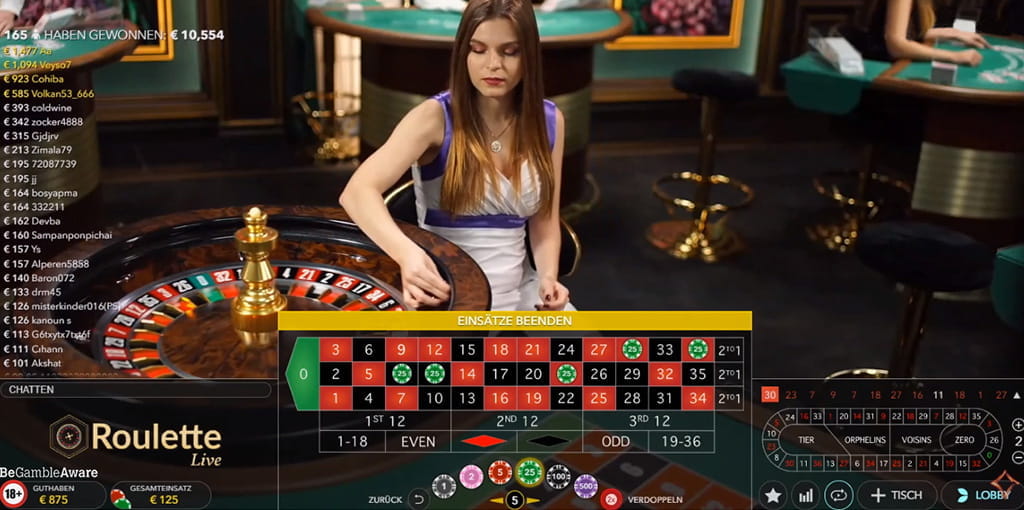
Roulette-Tisch und Kessel: Visuelle Übersicht

speed roulette

Gibt es Bedingungen für speed roulette spiel?

Was isch de Unterschied zwüschet europäischem und amerikanischem Roulette?

Bi europäischem Roulette het s nur e einzigi Nüll (0), während s amerikanische Roulette e Doppelnüll (00) dezue het. Das erhöht de Huusvorteil vo 2,7 % uf 5,26 %.

Was isch d’RTP (Rückzahligsquote) bi roulette?

Bi europäischem Roulette liit d’RTP bi 97,3 %, bi amerikanischem bi 94,74 %. Je weniger Nülle, desto höcher isch d’RTP.

Welchi Wettarte gits im Roulette und wie gross isch de Huusvorteil?

Es gitt Innèwette (uf einzelni Zahle, Farbe, etc.) mit em gliiche Huusvorteil und Ussèwette (uf Duusig, Kolonne, etc.) – de Huusvorteil isch bi allne Wette glyych, usser bi de «La Partage»-Regle im französische Roulette.

Was isch de Vorteil vom französische Roulette?

Es nutzt di gliichi Räder wie s europäische, het aber extra Regle wie «La Partage» oder «En Prison». Die senke de Huusvorteil bi gliiche Wette uf 1,35 %.

Welchi Strategie empfehlt ihr für Aafänger im Roulette?

Aafänger sötted sich uf eifachi Ussèwiete wie Rot/Schwarz oder Groot/Chlii konzentriere. Setze si immer gliichi Beträg und ignoriere Martingale-artigi System, will die langfrischtig nid funktioniere.

Transparenz ist bei speed roulette entscheidend für das Vertrauen der Spieler.

Selbstlimits setzen: So bleibt Roulette ein Vergnügen

Glücksspiel ist nur für Erwachsene ab 18 Jahren gestattet. In der Schweiz unterliegt das Online-Casino-Angebot der Aufsicht durch die Eidgenössische Spielbankenkommission (ESBK). Nutzen Sie die von den Betreibern bereitgestellten Selbstausschlussmöglichkeiten, um das Spielen einzuschränken. Setzen Sie sich persönliche Einzahlungs- und Zeitlimits und betrachten Sie Glücksspiele stets als Unterhaltung – nicht als Möglichkeit, Verluste auszugleichen. Bei Problemen wenden Sie sich an eine lokale Hilfsorganisation.

Über den Autor: . Jonas Becker ist unser Sicherheitsexperte. Seit 20 Jahren prüft er Lizenzen, Verschlüsselung und verantwortungsvolles Spielen in Online-Casinos.


Posted in Allgemein

speed roulette 2026 — Strategien für Anfänger

speed roulette – Die häufigsten Irrtümer und Mythen 2026

speed roulette bietet auch 2026 reichhaltigen Gesprächsstoff. Besonders die Rolle von speed roulette deutsch wird in Fachkreisen intensiv debattiert.

Siehe auch:

Einleitung: Warum speed roulette echtgeld für Spieler wichtig ist

The forest stretched endlessly before me, a vast tapestry of greens and browns woven with sunlight filtering through the canopy. Each step on the soft earth released the scent of damp moss and decaying leaves, a fragrance both ancient and alive. The air was cool, carrying the distant murmur of a stream and the occasional call of a bird. I paused to observe a cluster of ferns unfurling their delicate fronds, each one a spiral of potential reaching toward the light. Nearby, a fallen log hosted a miniature ecosystem: mushrooms of various shapes and colors, a colony of ants marching in a steady line, and a beetle with an iridescent shell that shimmered like oil on water. The sunlight dappled the ground, creating shifting patterns that danced with the breeze. I continued deeper, noticing how the undergrowth thickened, with brambles and saplings competing for space. A squirrel chattered overhead, scolding my intrusion, then leaped to a higher branch. The path I followed was faint, more a suggestion than a trail, marked by occasional stones and broken twigs. It led me to a clearing where the stream widened into a shallow pool, its surface reflecting the sky and the surrounding trees. Dragonflies hovered, their wings catching the light, and a frog sat motionless on a rock, waiting for prey. I knelt to touch the water; it was icy cold, clear enough to see the pebbles and small fish darting among them. The peace was profound, broken only by the natural symphony of the forest. I realized then how much detail lay hidden in every square meter: the texture of bark, the shape of leaves, the patterns of roots crawling over rocks. Each element told a story of growth, decay, and renewal. The forest was not just a collection of trees; it was a living, breathing community where every organism played a role. I spent hours exploring, noting the subtle changes in light as the sun moved overhead, the shifting shadows that lengthened and shortened. The air grew warmer, and the insect hum intensified. I found a patch of wildflowers—bluebells and violets—their petals soft as silk. A butterfly landed on one, its wings opening and closing slowly. I watched until it flew away, then continued my walk. The forest floor rose and fell, with small hills and hidden gullies. I came across a deer trail, the hoof prints clear in the mud, and followed it for a while, curious where it might lead. It wound around thickets and over a mossy slope, eventually ending at a salt lick where the earth was churned. I imagined the deer that came here, their silent grace. Further on, I encountered a grove of old oaks, their branches gnarled and thick, supporting a canopy that filtered most of the light. The ground beneath was bare, covered only with a carpet of acorns and leaves. In the center stood a massive stone, partially covered with lichen. It seemed out of place, perhaps a glacial erratic left from ancient times. I touched its surface, feeling the cool, rough texture. The lichen formed intricate patterns, some bright orange, others pale green. I wondered how long it had been there, how many seasons it had witnessed. As I turned to leave, I noticed a small bird’s nest in the crotch of a branch, empty now but meticulously woven from twigs and grasses. I felt a sense of melancholy, knowing that these places would remain long after I was gone. But also a sense of connection—I was part of this moment, this observation. The forest had a rhythm, a pulse that was both calming and invigorating. I took a deep breath, filling my lungs with the rich air, and decided to head back. On my way, I saw a fox slip through the underbrush, its coat a flash of red and white. It paused, looked back at me with curious eyes, then vanished. I smiled, grateful for the encounter. The walk back was quicker, as I knew the way. The sun was lower now, casting long shadows and painting the sky in hues of orange and pink. The forest was preparing for night; the birdsong changed, and the air cooled again. I emerged from the trees just as the first stars appeared. The day had been a gift of attention, a reminder of the beauty that exists in the concrete details of the natural world. Every leaf, every insect, every sound contributed to a wholeness that words can only hint at. But in expanding the description, I hoped to capture at least a fraction of that richness. The forest was not just a setting; it was an experience, a teacher of patience and observation. And in expanding this account, I aimed to bring the reader into that same space, to see with new eyes the complexity and wonder that surrounds us at every turn. The details are endless, and each one matters. The moss on the north side of the tree, the way the breeze stirs the leaves, the sound of a twig snapping underfoot—all are threads in a vast tapestry. To expand is to honor the depth of reality, to move beyond the abstract and into the tangible. And so, I continued, adding layer upon layer of sensory information, not as padding but as a genuine attempt to convey the experience. The forest had stories to tell, and I was merely the scribe. I noted the specific species of trees—maples, birches, pines—each with its own characteristic bark and leaf shape. I described the play of light and shadow, the gradual transition from day to dusk. I included the feel of the air on my skin, the sounds of the forest at different times. I recorded my own thoughts and emotions, the wonder and the gratitude.

Roulette verstehen: Tipps zu speed roulette deutsch

Platzier dini Jetons uf s Tableau, zum Biispiel uf e Zahl oder e Farb.

Wart, bis de Croupier d Rädli drait und d Kugle wirft.

Beobacht, wie d Kugle langsam zum Stillstand chunnt.

Vergliich d gwünnti Zahl und Farb mit dinere Wette.

Lass der d Gwinn uusbezahle, oder mach en neu Ysatz für di negschti Rundi.

Mit speed roulette echtgeld zum Erfolg: Unsere Strategie-Tipps

Die Grundlagen einer soliden Roulettestrategie

Jeder erfahrene Roulettespieler weiss, dass es keine Strategie gibt, die den Hausvorteil auf Dauer überwinden kann. Dennoch können durchdachte Ansätze helfen, das Spiel systematischer anzugehen und das Risiko zu kontrollieren. Die zentrale Erkenntnis für Anfänger ist, dass Roulette ein reines Glücksspiel bleibt – die Kugel kennt keine Muster. Eine gute Strategie beginnt daher nicht mit der Wahl der Zahlen, sondern mit einem klaren Verständnis der verschiedenen Spielvarianten. Europäisches Roulette mit einer Null hat einen Hausvorteil von nur 2,7 %, während die amerikanische Variante mit einer zusätzlichen Doppelnull auf 5,26 % klettert. Für Strategien ist daher die europäische oder französische Version die weitaus bessere Wahl. Die französische Variante senkt den Hausvorteil bei einfachen Chancen sogar auf 1,35 % dank der „La Partage“-Regel. Wer langfristig spielen möchte, sollte sich auf diese Tische konzentrieren und die hohen Auszahlungen der Einzelzahlen eher meiden, da diese zwar verlockend, aber statistisch nachteilig sind.

Die Martingale-Strategie: Chancen und Fallstricke

Die bekannteste Roulettestrategie ist das Martingale-System, bei dem der Spieler nach jedem Verlust den Einsatz verdoppelt, um den vorherigen Verlust mit einem einzigen Gewinn wieder auszugleichen. Auf dem Papier erscheint dies narrensicher, doch in der Praxis stösst es schnell an Grenzen. Angenommen, Sie setzen 5 Franken auf Rot und verlieren. Beim nächsten Spin setzen Sie 10 Franken, dann 20, 40 und so weiter. Nach fünf Verlusten in Folge liegt Ihr Einsatz bereits bei 160 Franken. Das Problem: Die meisten Tische haben ein maximales Einsatzlimit, das oft bei 1000 oder 2000 Franken liegt. Bei einer längeren Pechsträhne – etwa zehnmal Schwarz hintereinander – wäre der erforderliche Einsatz astronomisch. Zudem benötigen Sie ein sehr grosses Bankroll, um solche Serien durchzustehen. Die Wahrheit ist, dass Martingale kurzfristig kleine Gewinne bringen kann, aber bei einer langen Verlustserie das gesamte Kapital vernichtet. Erfahrene Spieler nutzen es daher nur mit einem strikten Stop-Loss und niedrigen Basiseinsätzen.

vave casino bewertung — umfassender Kundenservice | vave casino

Die Fibonacci-Strategie als risikoärmere Alternative

Eine sanftere Variante ist die Fibonacci-Strategie, die auf der berühmten Zahlenfolge basiert: 1, 1, 2, 3, 5, 8, 13, 21, 34 usw. Bei dieser Methode erhöhen Sie den Einsatz nach einem Verlust um eine Stufe in der Fibonacci-Reihe, während Sie nach einem Gewinn zwei Schritte zurückgehen. Dadurch wachsen die Einsätze langsamer als beim Martingale-System, was die Verlustrisiken etwas mindert. Der Nachteil: Ein einzelner Gewinn holt nicht alle Verluste herein, sondern nur die letzten beiden. Sie benötigen also eine Serie von Gewinnen, um insgesamt profitabel zu sein. Fibonacci eignet sich besonders für einfache Chancen wie Rot/Schwarz oder Gerade/Ungerade. Ein typischer Ablauf: Sie setzen 5 Franken, verlieren, dann 5, dann 10, dann 15. Nach einem Gewinn auf der 15-Franken-Stufe gehen Sie zurück zur 5-Franken-Stufe. Wichtig ist, dass Sie die Sequenz vorher aufschreiben und diszipliniert folgen. Auch diese Strategie schützt nicht vor dem Hausvorteil, aber sie strukturiert das Spiel und verhindert impulsive Entscheidungen.

Bankroll-Management und mentale Disziplin für Anfänger

Die mit Abstand wichtigste „Strategie“ für Roulette-Neulinge ist ein durchdachtes Geldmanagement. Legen Sie vor dem Spiel ein Budget fest, das Sie sich leisten können zu verlieren – niemals mehr. Teilen Sie dieses Budget in kleine Einheiten auf, beispielsweise 50 Einheiten à 10 Franken. Setzen Sie pro Runde nicht mehr als 2–3 % Ihres Gesamtbudgets. So überstehen Sie auch längere Durststrecken, ohne pleitezugehen.

casino spiele kostenlos ohne anmeldung 2026 — Anleitung für Anfänger

Erfahrene Spieler achten bei speed roulette besonders auf die Auszahlungsquote.

Roulette Boni und Umsatzbedingungen: Das sollten Sie wissen

  • 200% Bonus bis zu €250
  • 150% bis zu €200
  • 200 Freispiele ohne Umsatzbedingungen
  • 25x Umsatzpflicht
  • 25x Umsatzvorgabe
  • 25x Bonusdurchspiel

FAQ zu speed roulette deutsch: Klar und verständlich erklärt

Was ist der Unterschied zwischen europäischem, amerikanischem und französischem Roulette?

Europäisches Roulette hat eine Null, amerikanisches eine doppelte Null, was den Hausvorteil auf 5,26 % erhöht. Französisches Roulette hat ebenfalls eine Null, bietet aber Sonderregeln wie „La Partage“ und „En Prison“, die den Hausvorteil auf 1,35 % senken.

Welche Wette bietet die besten Gewinnchancen beim Roulette?

Einfache Chancen wie Rot/Schwarz, Gerade/Ungerade oder 1–18/19–36 haben die höchste Gewinnwahrscheinlichkeit (48,6 % im europäischen Roulette) und eignen sich am besten für Anfänger.

Was ist der Hausvorteil bei Live-Roulette?

Der Hausvorteil bei Live-Roulette entspricht dem der jeweiligen Variante – meist 2,7 % für europäisches und 1,35 % für französisches Roulette. Achten Sie auf die Tischregeln, da manche Anbieter die „En Prison“-Regel anbieten.

Wie hoch ist die RTP (Rückzahlungsquote) beim Roulette?

Die RTP beträgt beim europäischen Roulette 97,3 %, beim französischen mit Sonderregeln 98,65 % und beim amerikanischen 94,74 %. Je niedriger der Hausvorteil, desto höher die RTP.

Welche Strategie eignet sich für Anfänger?

Setzen Sie auf einfache Chancen mit kleinem Einsatz und nutzen Sie das Martingale-System nur mit striktem Budget. Konzentrieren Sie sich auf europäisches oder französisches Roulette, um den Hausvorteil zu minimieren.

Die rechtliche Lage von speed roulette variiert je nach Land.

Selbstlimits setzen: So bleibt Roulette ein Vergnügen

Glücksspiel ist nur für Erwachsene ab 18 Jahren gestattet. Nutzen Sie die von der zuständigen Regulierungsbehörde anerkannten Selbstausschlussprogramme der Anbieter, um Ihr Spielverhalten zu kontrollieren. Setzen Sie sich persönliche Einzahlungs- und Zeitlimits und spielen Sie stets aus Unterhaltungsgründen – niemals in der Absicht, Verluste auszugleichen. Sollten Sie Hilfe benötigen, wenden Sie sich an eine lokale Hilfsorganisation. Verantwortungsvolles Spielen steht bei Spielwelt im Mittelpunkt.

Über den Autor: . Seit über 15 Jahren analysiert Friedrich Weber die Angebote von Online-Casinos. Sein Fokus liegt auf Spielvielfalt und Auszahlungsgeschwindigkeiten.


Posted in Allgemein